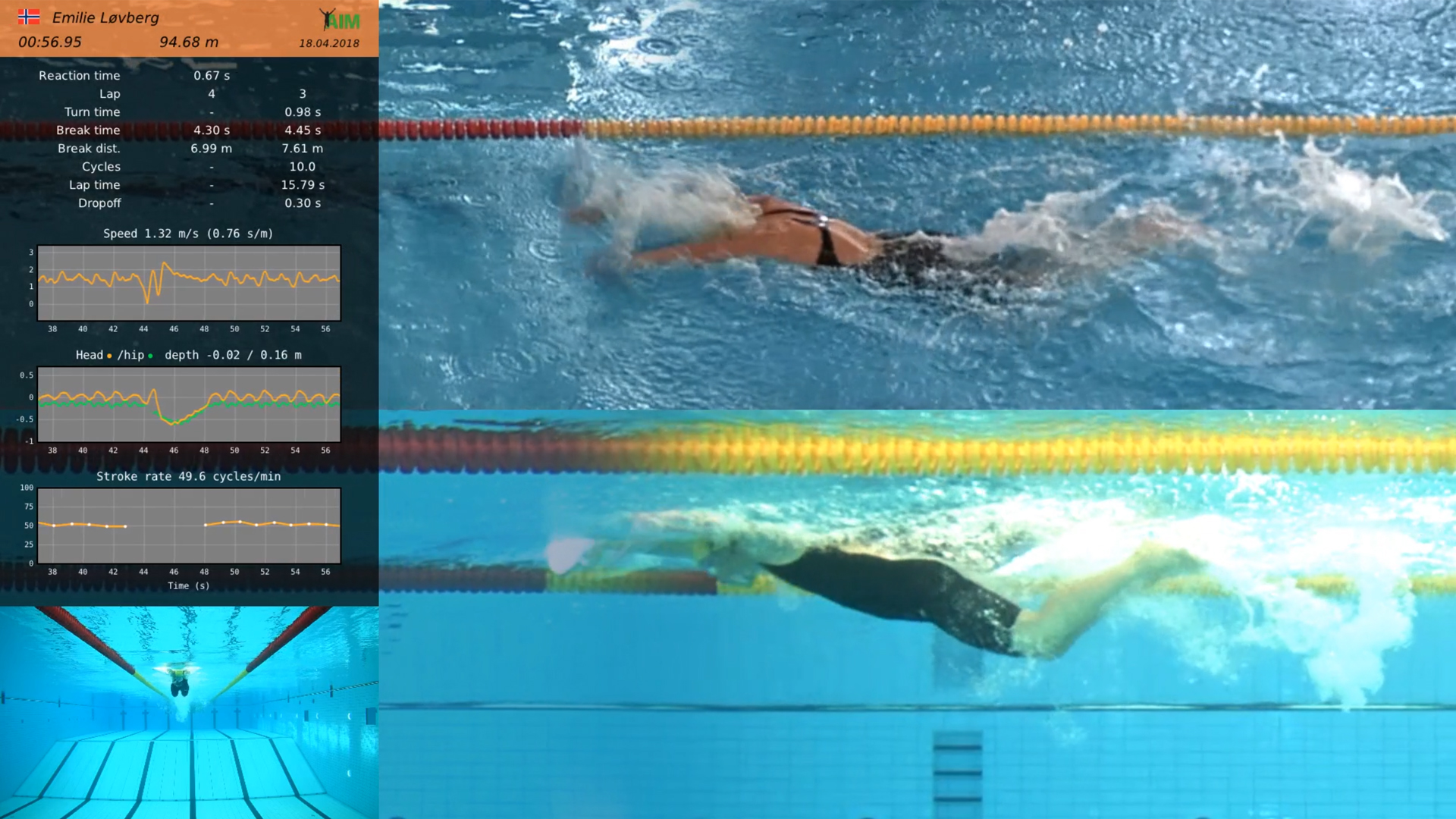
Breaststroke Stroke Rate: Why Rate vs. Distance Per Stroke Is a Tradeoff
Faster stroke rate doesn't always mean faster breaststroke. Here's the tradeoff between stroke rate and distance per stroke, and how to measure it.

Faster stroke rate doesn't always mean faster breaststroke. Here's the tradeoff between stroke rate and distance per stroke, and how to measure it.
Reaction time tells you how fast a swimmer responds to the beep. Block time tells you what they did after — and that's where races are actually won or lost.
Most practice plans are built on hunches about what a swimmer needs to fix. Here's how to build them around measured data instead.
Fixed camera data lets national team coaches track turn time, breakout distance, and stroke rate progression objectively across an entire training season.
Finish time alone can't show why a swimmer improved. Turn time, breakout distance, and dropoff trends give coaches a session-level view of real progression.
Most clubs don't need more data. They need a smaller, repeatable data-tracking routine that fits the time coaches actually have.
One underperforming wall phase can quietly set the ceiling on a swimmer's entire race, far more than an even but mediocre lap.
Underwater speed after the start decays continuously from push-off — surfacing too early or too late both cost time. Here's how to coach the breakout point.
Upload-a-video apps give you one clip at a time. A fixed camera swim analysis system gives a training program a consistent, timing-synced dataset it can build on.
A multi-day swim video breakdown delay means swimmers repeat flawed technique before anyone catches it. Here's why that gap matters more than coaches assume.
A swimmer's top speed for the entire race happens in the first 15 meters off the start — and most coaching time goes elsewhere.
Turn time and breakout distance shouldn't be judged against one fixed standard. Here's how to set benchmarks that actually fit a swimmer's age and stage.
Symmetric strokes and alternating strokes respond to stroke-rate changes differently — here's how to coach each one correctly.
A correction lands differently when it arrives minutes after the swim instead of days later. Here's why timing matters as much as content.
Sports science shows fast swimmers don't share one underwater technique template — here's what actually correlates with speed, and how to measure it.
Stroke rate isn't something a swimmer should just "have" — it's a skill they can learn to control deliberately, lap by lap.
Chasing more underwater kicks isn't the same as improving breakout distance. Here's how to coach the metric that actually matters.
Reaction time is overrated as a start metric. Block time, entry distance, and underwater speed tell a coach much more about a real start.
Treating the wall as one skill hides where a swimmer actually loses time. Split turn coaching into turn, push-off, and underwater phases instead.
A faster final time doesn't tell you what improved. Lap-by-lap comparison across months shows exactly where the gain actually happened.
University swim programs are dropping manual video tagging for automated, camera-based race analysis that removes filming and data entry from every practice.
A stopwatch shows the final time, but lap-by-lap data reveals exactly where and why a swimmer's technique is breaking down.
Surfacing too early off the wall quietly costs swimmers speed every single lap. Breakout distance data shows exactly when and why it happens.
Lap-by-lap dropoff patterns tell you exactly whether a swimmer's problem is top-end speed or aerobic conditioning.
Isolated turn drills can wreck a backstroke swimmer's distance-to-wall judgment — here's how to train turns without losing it.
Manual video review eats hours of a university coach's week. Here's how a fixed, automated camera system removes the capture-and-review bottleneck.
National team coaches need season-long technical data, not just PBs. Here's how turn time, breakout, stroke rate, and dropoff tracking fill that gap.
Delayed video review costs coaches the subtle details, like pull-out timing, that same-session feedback catches while the swimmer still remembers the feeling.
Backstroke starts shouldn't look the same at 11 and 17. Here's what actually needs to change, and how to measure it.
Leg power alone doesn't explain a fast backstroke start — underwater speed off the wall is the metric that actually predicts performance.
Underwater kicking data shows more than kick speed — it reveals core stability, body position, and where technique breaks down under fatigue.
Breaking down individual medley turn times lap by lap shows exactly which stroke-to-stroke transition needs work, not just a vague sense of "the breaststroke turn is slow."
Distance per stroke only matters alongside stroke rate — research shows a longer stroke isn't always the faster one, and dropoff under fatigue is a trainable skill.
With AIM Systems, a coach can see lap time, stroke rate, turn time, and breakout distance before a swimmer's next rep even starts.
Medley transitions deserve their own practice block, not just leftover time after stroke work. Here's why, and how to measure it.
Start entry distance isn't fixed — it shifts as swimmers get stronger and refine technique, and tracking it precisely reveals real progress.
Generic stroke-rate charts don't fit every swimmer. Here's how to build a target from a swimmer's own lap-by-lap data instead.
When a taper swim comes in slower than expected, coaches blame the taper. The lap data usually tells a different story.
Published swim race analysis research shows fixed-distance measurements often miss where swimmers actually lose time — here's what to measure instead.
Reaction time off the block rarely matches between practice and competition. Here's why, and how coaches can actually measure the gap.
Manual video tools like Dartfish require tagging every turn by hand. AIM Systems' fixed camera installation automates the entire process instead.
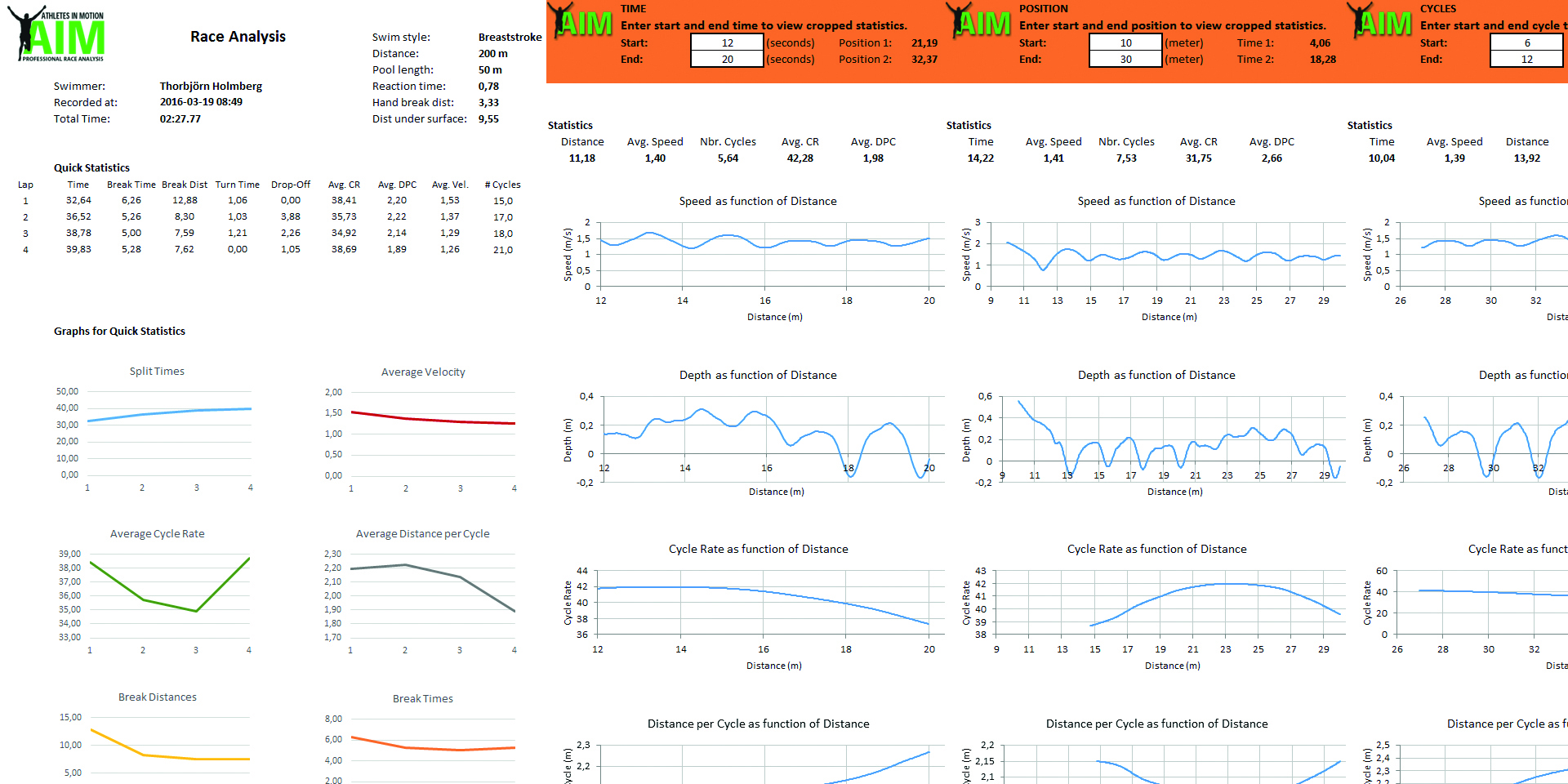
Breaststroke turn time hides more than freestyle — here's what separates a fast wall from a slow one, and how to measure it precisely.
Handheld and pole cameras give footage. Automated swim analysis gives numbers, synced to timing, for every lap.
A guide to building a real swimmer development dashboard from automated turn time, breakout, stroke rate, and dropoff data — not another admin tracker.
Averaging breakout distance hides the real problem — race-to-race variance is what actually signals technical fatigue and inconsistent turns.
A practical comparison of manual, hand-tagged video analysis and automated camera-based race analysis for university and national swim programs.
Breakout distance, not just breakout time, reveals whether a swimmer is truly using the underwater phase — here's why it's worth tracking.
Breakout distance is one of the clearest fatigue signals in a race, and most coaches never see it change lap by lap.
Tethered speedometers and IMUs can measure turn speed, but they require gear on the swimmer. Here's how camera-only video analysis compares.
Wearables track motion. Cameras track technique. Here's why more swim clubs are choosing markerless, camera-only analysis over sensor-based systems.
No sensors, no markers, no wearables — just cameras and software reading stroke mechanics with a precision most sensor systems can't touch.
A faster time doesn't tell you why a swimmer improved. Here's how video-based race data adds the technique layer that time-only season comparisons miss.
Breakout distance reveals whether a swimmer's underwater kick strength actually matches their race strategy — here's how to read it correctly.
Coaches who want parents and swimmers to actually check a development dashboard need three metrics, not thirty — here's which ones work and why.
Social Contact