
Medley transitions are not the same skill as swimming a stroke well. A swimmer can have a strong butterfly and a strong backstroke, and still lose time at the wall where one turns into the other. That transition — the touch, the rotation, the push-off, the switch in body position — is its own technical skill. It deserves its own practice block, not just a few reps tacked onto the end of stroke-specific training.
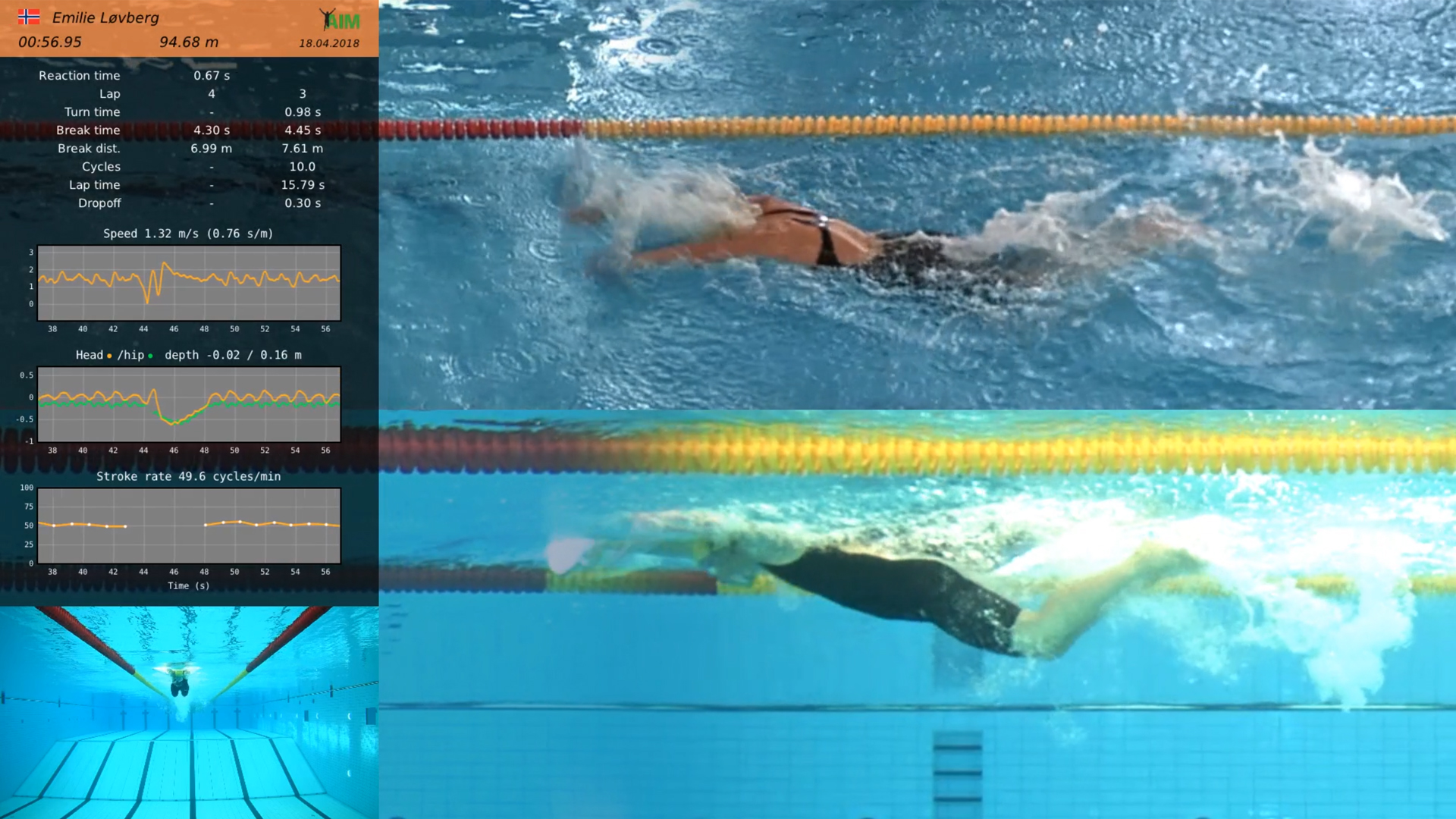
Most club schedules split practice by stroke: fly day, back day, breast day, free day. Medley gets bundled in as “swim a 200 IM” once a week. But the transition itself — fly-to-back, back-to-breast, breast-to-free — never gets isolated and drilled the way a turn or a start does. That’s a gap, because transitions are where races are actually won or lost.
Why medley transitions break down under fatigue
A transition looks simple in practice, when a swimmer is fresh and thinking clearly. It looks very different in the third length of a 200 IM, when the legs are heavy and the touch has to happen on tempo, not on autopilot. Coaches need to see how the transition performs under race-like fatigue, not just in isolation.
This is where dropoff data matters. Dropoff is the change in lap time compared to the swimmer’s previous lap. If a swimmer’s transition lap consistently shows a bigger dropoff than the laps around it, that’s a specific, coachable problem — not a vague “she got tired” explanation.
What the research says about pull-outs and transitions
Research from the Norwegian School of Sport Sciences (Gonjo & Olstad, 2021) looked at elite versus sub-elite breaststrokers over a full 100m race, using the AIM race analysis system. The surprising finding: there was no measurable difference between elite and sub-elite swimmers in the pull-out phase itself, or in the very start of the swim-out right after it.
Elite swimmers won their races mainly through faster clean-swimming velocity and better glide off the wall — not a faster pull-out. The researchers also modeled what would happen if swimmers swapped in their own best pull-out segments for their weaker ones. Two swimmers with nearly identical race times could both have dropped under 60 seconds. That’s a strong signal that pull-outs and transitions are under-coached even at a high level.
How to train transitions as their own drill
- Isolate the transition: swim into the wall on one stroke, execute the change, and swim only 5-10 meters out — then stop and repeat.
- Practice transitions under fatigue, not just fresh, since race conditions are never fresh.
- Track turn time and dropoff at each transition point specifically, not just the overall IM split.
AIM Systems measures turn time — from hand-touch to push-off — and lap-by-lap dropoff automatically, for any stroke including medley segments. A coach can pull up the stitched video and spreadsheet after a 200 IM and see exactly which transition cost time, and compare it against the swimmer’s own past best. That turns “work on your transitions” into a specific, measurable target instead of a general instruction.
If your club wants to see how this looks with your own swimmers, get in touch with AIM Systems — no pressure, just a look at what the data shows.
Frequently asked questions
Why do medley transitions matter more than people think?
Research on elite breaststrokers found no real speed advantage in the pull-out itself, meaning transitions are an under-coached area where time is often left on the table.
How can coaches measure a medley transition objectively?
AIM Systems tracks turn time at each wall and lap-by-lap dropoff, so a coach can see exactly which transition slowed the swimmer down.
Should medley transitions be trained separately from stroke technique?
Yes, because a transition is a distinct skill involving touch, rotation, and push-off timing that doesn’t automatically improve just from strong individual stroke work.
Sources
- Gonjo, T., & Olstad, B.H. (2021). Differences between elite and sub-elite swimmers in a 100 m breaststroke: a new race analysis approach with time-series velocity data. Sports Biomechanics. https://doi.org/10.1080/14763141.2021.1954238
Social Contact