
Swim lap time data answers a question coaches guess at constantly: is this swimmer slow because they lack speed, or because they can’t hold their speed? Those two problems need completely different training. Guessing wrong wastes months of a training cycle.
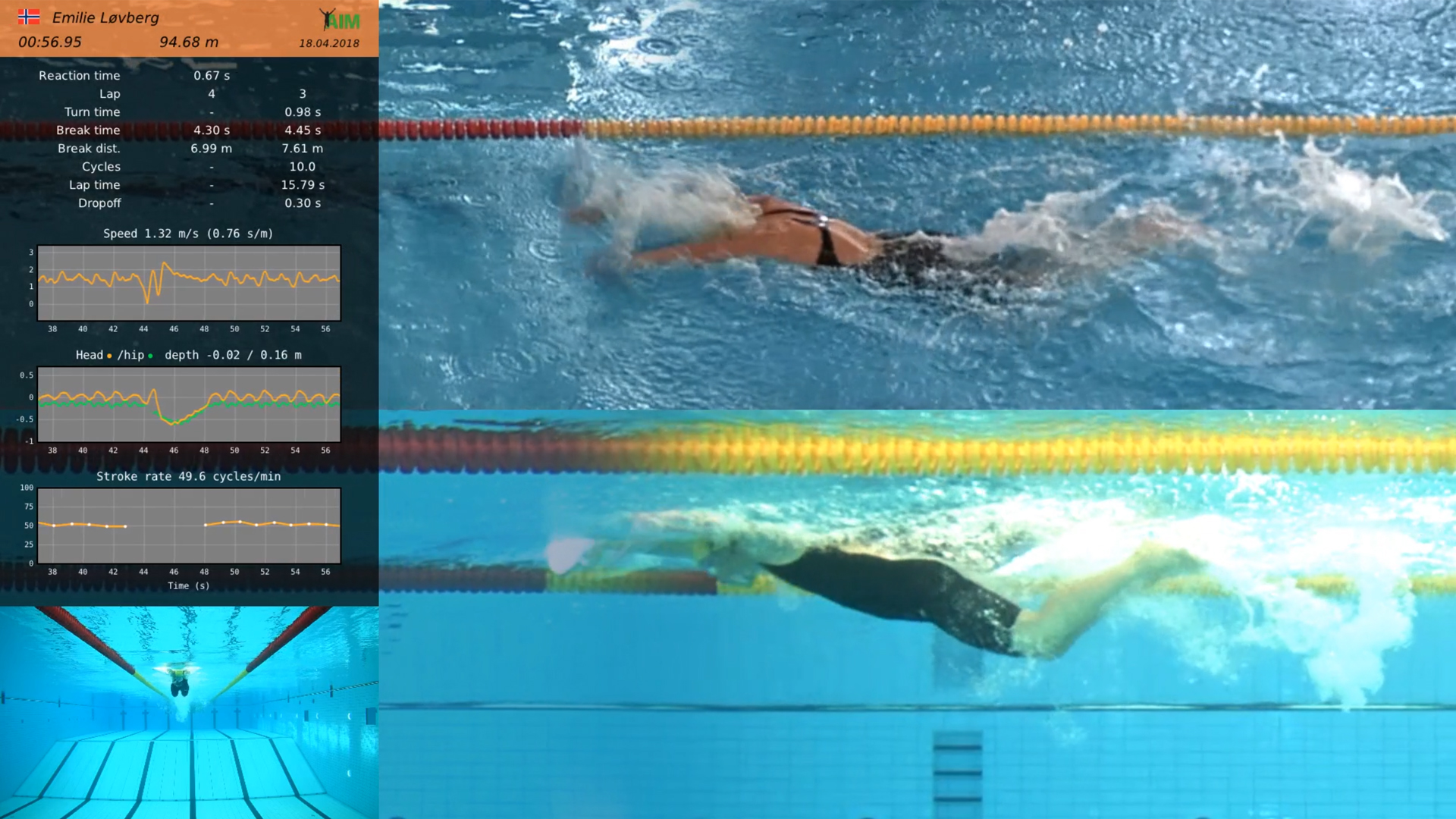
The fix isn’t a single number. It’s the pattern of lap times across the whole race, and specifically how much each lap drops off from the one before it.
What dropoff actually tells you
Dropoff is the change in lap time compared to the previous lap. A swimmer with a small, consistent dropoff across a 100m or 200m race is pacing well and holding conditioning. A swimmer whose dropoff grows sharply in the final laps is running out of aerobic capacity, not raw speed.
Compare that to a swimmer whose first lap is only mediocre, even though their dropoff stays flat the rest of the way. That swimmer isn’t fading — they simply don’t have a fast top gear to start with. That’s a speed problem, not a conditioning one.
This distinction matters because coaches often default to more yardage when a swimmer times slow. However, if the issue is a low ceiling on speed rather than fatigue, extra conditioning volume won’t fix it. The swimmer needs sprint work, starts, and power development instead.
Why the middle of the race hides the real story
Lap time alone can mask what’s actually happening underwater. Research from the Norwegian School of Sport Sciences (Gonjo & Olstad, 2021) used the AIM race analysis system to compare elite and sub-elite 100m breaststrokers. Elite swimmers were faster mainly due to higher clean-swimming velocity and a notably quicker glide off the wall push-off, not a faster pull-out phase.
In fact, the study found no meaningful difference between elite and sub-elite swimmers in the pull-out itself. That’s a reminder that a slow overall lap time can come from a specific, narrow segment of the lap rather than a general fitness gap. Lap time is the summary. The breakdown is where the answer lives.
The same study modeled what would happen if swimmers swapped in their own best transition segments in place of their weaker ones. Two swimmers with nearly identical race times could both have gone under 60 seconds. That’s a strong argument for looking past the finish-line number and into the lap-by-lap and phase-by-phase detail.
How AIM Systems makes this practical
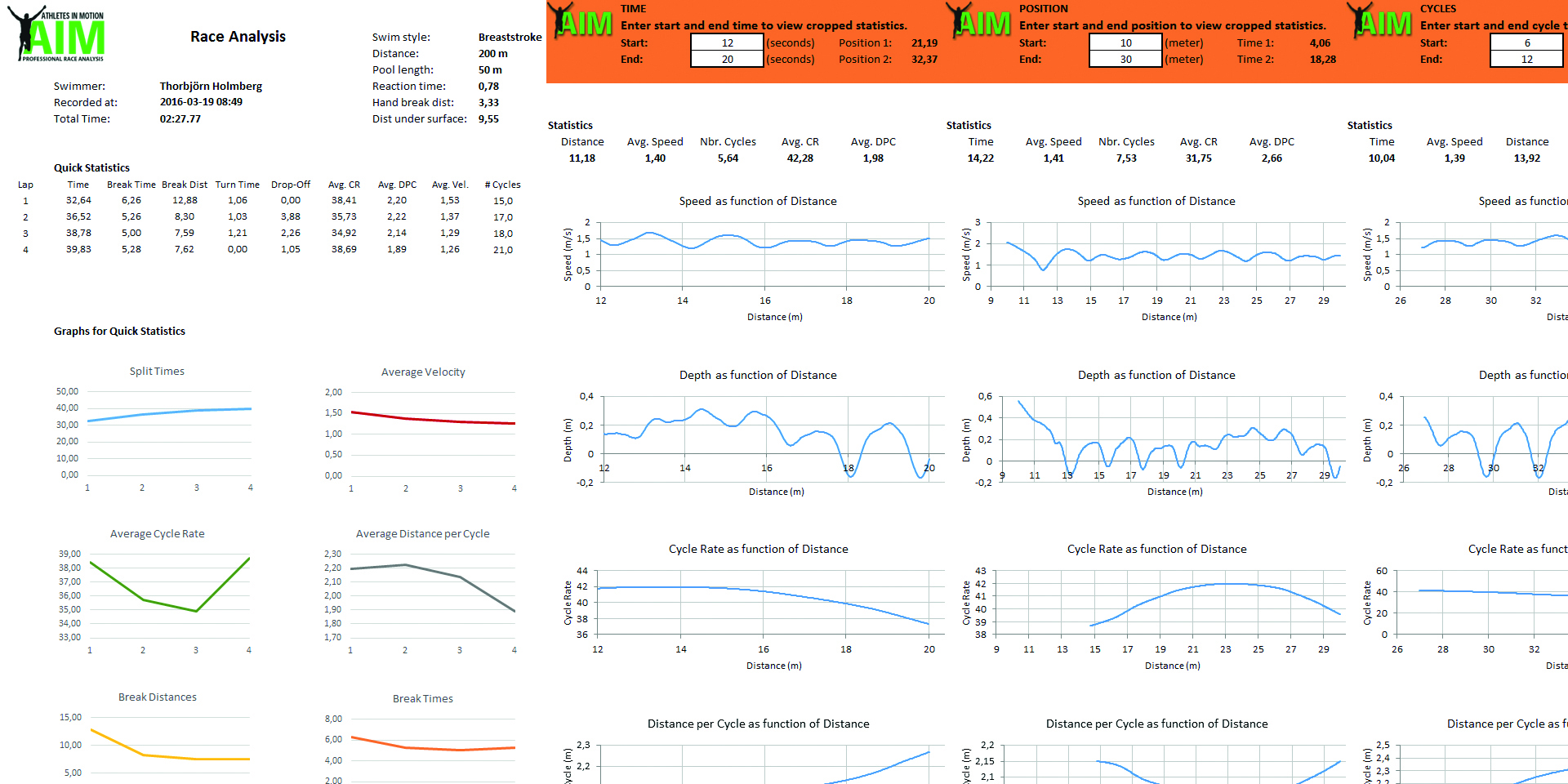
This is exactly where AIM Systems earns its keep. Every automated capture logs lap time and dropoff for each length, alongside stroke count, turn time, and breakout distance for the same lap. A coach can see immediately whether a slow 200m came from a weak final 50m (conditioning) or a modest opening 50m (speed).
Because the system also tracks horizontal speed continuously through the swim, you can look inside a single lap and see exactly where the swimmer loses velocity. That’s a different question than just “why was this lap slow,” and it’s one stopwatch splits can’t answer.
- Flat dropoff, slow start: build speed and start work.
- Growing dropoff late in the race: build conditioning.
- Fine dropoff, slow lap despite good speed: check the transition or turn phase.
Once you know which category a swimmer falls into, the training plan writes itself. That’s the real value of lap time data — it turns a vague “get faster” goal into a specific, testable training decision.
If you want to see how AIM Systems captures this lap-by-lap detail at your own facility, get in touch — we’re happy to walk through it.
Frequently asked questions
How do you know if a swimmer needs more speed or more conditioning?
Check the lap-by-lap dropoff pattern: a slow first lap with flat dropoff points to a speed gap, while dropoff that grows late in the race points to a conditioning gap.
What is dropoff in swim lap time data?
Dropoff is the change in lap time compared to the previous lap, and it shows whether a swimmer is fading or pacing consistently.
Can lap time alone tell you what’s wrong with a swimmer’s race?
Not fully, since research using the AIM race analysis system found that overall time differences often come from a specific phase like glide velocity rather than the whole lap.
Sources
- Gonjo, T., & Olstad, B.H. (2021). Differences between elite and sub-elite swimmers in a 100 m breaststroke: a new race analysis approach with time-series velocity data. Sports Biomechanics. https://doi.org/10.1080/14763141.2021.1954238
Social Contact