
Most video-based race analysis tools on the market today still require a human to tag the footage. Someone has to scrub through video, mark each turn, and log stroke counts by hand. In 2026, university programs evaluating race analysis options should know there’s a faster path: fully automated capture that skips manual tagging entirely.
Tools like Dartfish and SwimWatch are built around manual video review. A coach or grad assistant imports footage, then tags key moments — start, turns, finish — frame by frame. It works, but it’s slow. A single 200-yard swim can take 20-30 minutes to fully break down by hand. Multiply that across a full roster and a full season, and it becomes a part-time job.
What automated video race analysis actually changes
AIM Systems takes a different approach. Instead of one camera and a manual tagging workflow, a fixed installation of 11 to 22 cameras covers the pool from multiple angles — above and below water. The system syncs directly with the pool’s existing Omega timing system, so touchpad data and video are already aligned before the coach even opens the file.
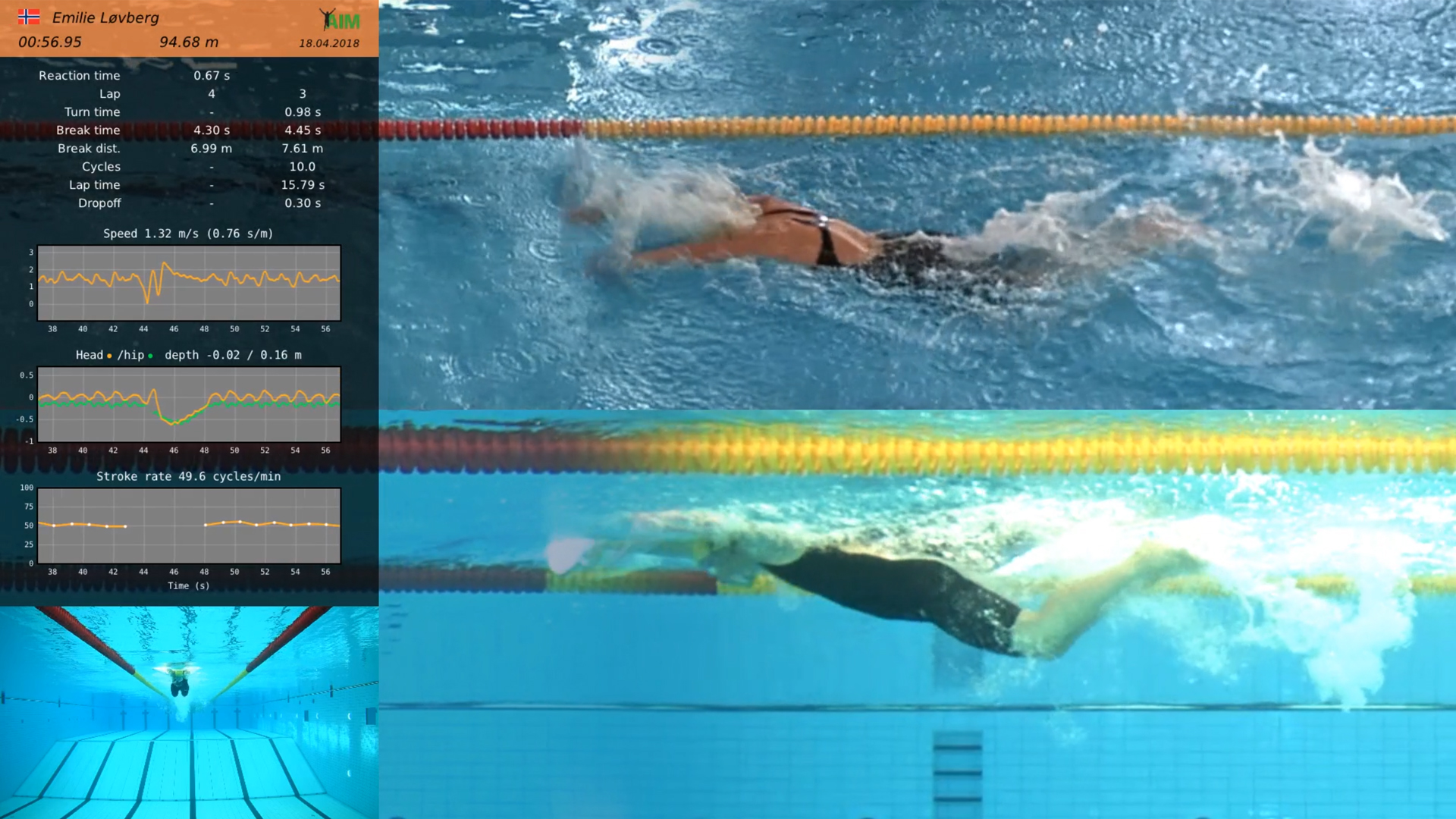
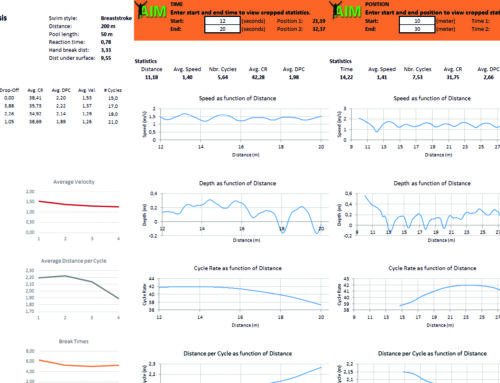
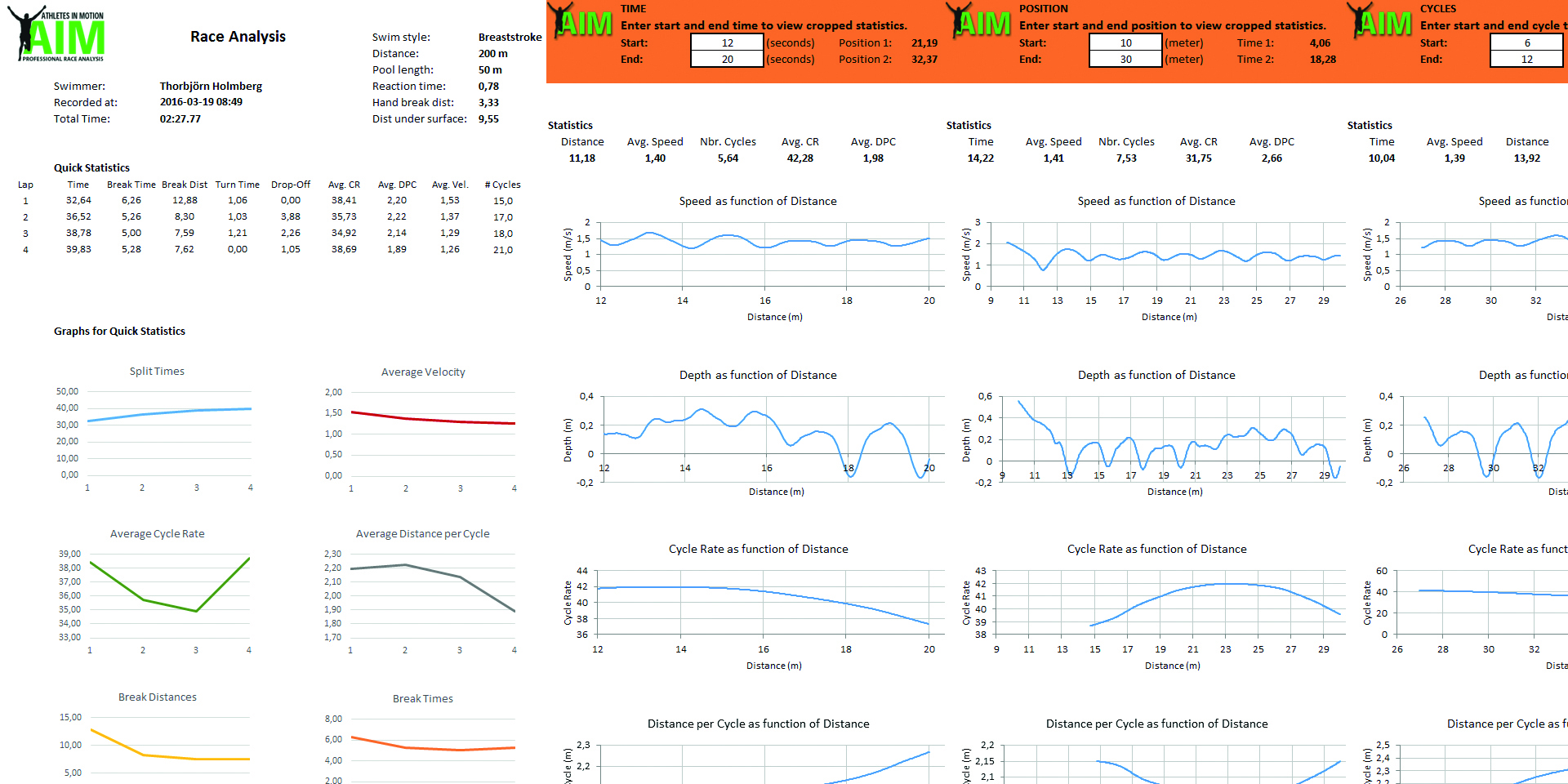
The result: a swimmer completes a swim, and within minutes the system produces a stitched video with data overlaid on the footage, plus a spreadsheet of every extracted stat. No tagging. No scrubbing through footage to find the third turn. It’s already done.
That includes turn time, breakout time and distance, stroke count, stroke rate, lap time, and dropoff between laps — all measured automatically, per lap, for the one swimmer and lane being captured. Because the tracking is camera-only, with no wearable sensors or markers needed, it captures real stroke mechanics and underwater technique that a single manual camera angle simply can’t see.
Why this matters more for university programs specifically
A national-team or collegiate program isn’t analyzing one swim per week. It’s analyzing dozens, across multiple strokes and training groups, often during the same practice block. Manual tagging tools scale linearly with coaching staff time — more swims means more hours at a laptop.
Automated capture doesn’t have that problem. Once a session is set up, capture and analysis run without added labor per swim. That frees coaching staff to spend time interpreting data with athletes, instead of producing it.
It’s also worth being clear about what automated analysis is not. AIM Systems’ automated mode tracks one swimmer in one lane at a time — it’s not a multi-lane meet-day broadcast tool, and it’s a fixed installation, not something that travels to away meets. For general technique review outside a timed swim, a manual recording mode is also available on the same cameras.
What to look for when evaluating options in 2026
When comparing platforms, ask three questions: Does it require manual tagging per swim? Does it sync natively with your existing Omega timing system? And does it measure underwater phases — breakout distance, entry position, underwater speed — without needing markers or a special cap on the swimmer?
Systems like AIM Systems, already running at Kuortane Olympic Training Center, INCEP Paris, the Norwegian Institute of Sport, and SCAR in Lund, were built specifically to answer yes to all three.
If your program is weighing automated versus manual video analysis for next season, it’s worth a conversation. Get in touch with AIM Systems to see how a fixed installation would fit your pool.
Frequently asked questions
What is the difference between automated and manual swim video analysis?
Manual tools like Dartfish require a coach to tag turns, starts, and strokes by hand, while automated systems like AIM Systems extract that data directly from synced camera and timing feeds.
Does automated video analysis work with existing pool timing systems?
Yes, AIM Systems syncs directly with a standard Omega timing system already installed in the pool, using touchpad data for timing.
Can automated race analysis track multiple swimmers at once?
No, the automated capture mode tracks one swimmer in one lane per session, so no other swimmers can be in the pool during that capture.
Social Contact