

A swimmer development dashboard works only if a 12-year-old and their parent can read it without you standing next to them explaining it. Most clubs that try to build one fail at this single point: they design for coaches, using FINA points, split analysis, and stroke-rate jargon that means nothing to the people who actually need to stay motivated between meets. The fix isn’t dumbing down the data — it’s choosing the right three metrics and presenting them consistently.
Here’s the core idea: pick metrics that answer three questions a parent or swimmer actually asks — Am I improving? How do I compare to where I was? What should I work on next? Everything else is coach-facing detail that belongs in a separate report.
The three numbers that matter
- Personal best trend — a simple line showing best times per event over the season, not a table of splits. Seeing a downward slope in the 100m free tells a 13-year-old more than any percentage improvement figure.
- FINA points progression — this is the one number that lets a swimmer compare a 50m breaststroke to a 200m IM on equal footing. Parents especially like this because it turns “did we improve” into a single trackable score across every event their kid swims.
- One technical focus area — pick a single measurable thing, like wall velocity off the turn or stroke count per length, and show it as a before/after rather than a stream of session data.
Notice what’s missing: heart rate zones, detailed stroke mechanics breakdowns, training load charts. Those matter, but they belong to the coach-athlete conversation, not the family-facing dashboard. If you put everything on one screen, nobody reads any of it.
Consistency beats sophistication
The clubs that get this right update the dashboard on the same schedule every time — after every meet, not “eventually.” A parent who sees the same three panels update predictably after every competition starts checking it on their own, which is the actual goal. A beautiful dashboard that gets updated sporadically trains people to ignore it.
This is also where automation matters more than design polish. If a coach has to manually recalculate FINA points and re-enter personal bests after every meet, the dashboard dies within a season — not because the idea was bad, but because the labor doesn’t survive a busy competition calendar. This is exactly the gap AIM Systems is built to close: live poolside timing capture feeds directly into FINA points calculation and personal best tracking, so the family-facing numbers update automatically the moment a swimmer touches the wall, with no re-entry step for a coach to skip when things get busy.
Show the race, not just the number
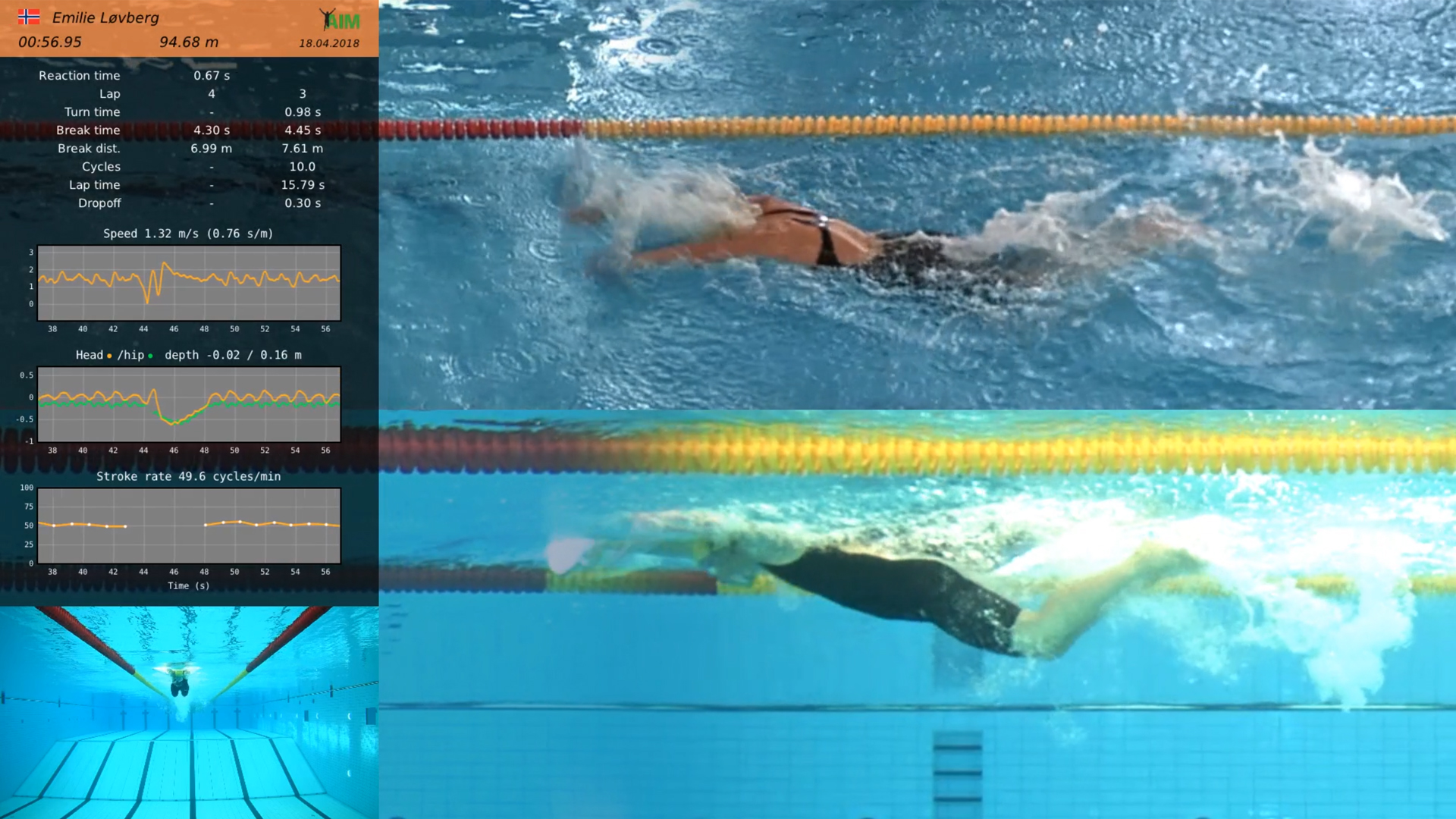
Numbers convince the brain; race footage convinces everyone else. Pairing the personal-best trend line with a broadcast-style race overlay — the swimmer’s current swim next to their best swim, side by side — turns an abstract improvement into something visible in real time. Parents who don’t know what a “0.3 second drop” means absolutely understand watching two swimmers pull ahead or fall behind on screen.
If you’re building this for your own club, start smaller than you think. Pick one event group, three metrics, and one update schedule, and get that right before expanding to the whole roster. A dashboard that covers ten metrics for fifty swimmers and gets abandoned in six weeks helps no one.
If you want to see how wall velocity data, FINA points, and race overlays actually come together in a live meet setting, it’s worth a short conversation — get in touch with AIM Systems and we can walk through it.
Frequently asked questions
What metrics should a swim club dashboard show parents?
Personal best trends, FINA points progression, and one clear technical focus area like wall velocity are enough — more than that gets ignored.
How often should a swimmer development dashboard be updated?
After every meet, on a predictable schedule, since irregular updates train families to stop checking it.
Why use FINA points instead of raw times for tracking progress?
FINA points let swimmers and parents compare progress across different events and distances using a single consistent score.
Social Contact