
Distance per stroke is the distance a swimmer covers per arm cycle. Coaches love it because it feels like a clean measure of efficiency. But chasing a bigger number in isolation can actually make a swimmer slower, not faster.
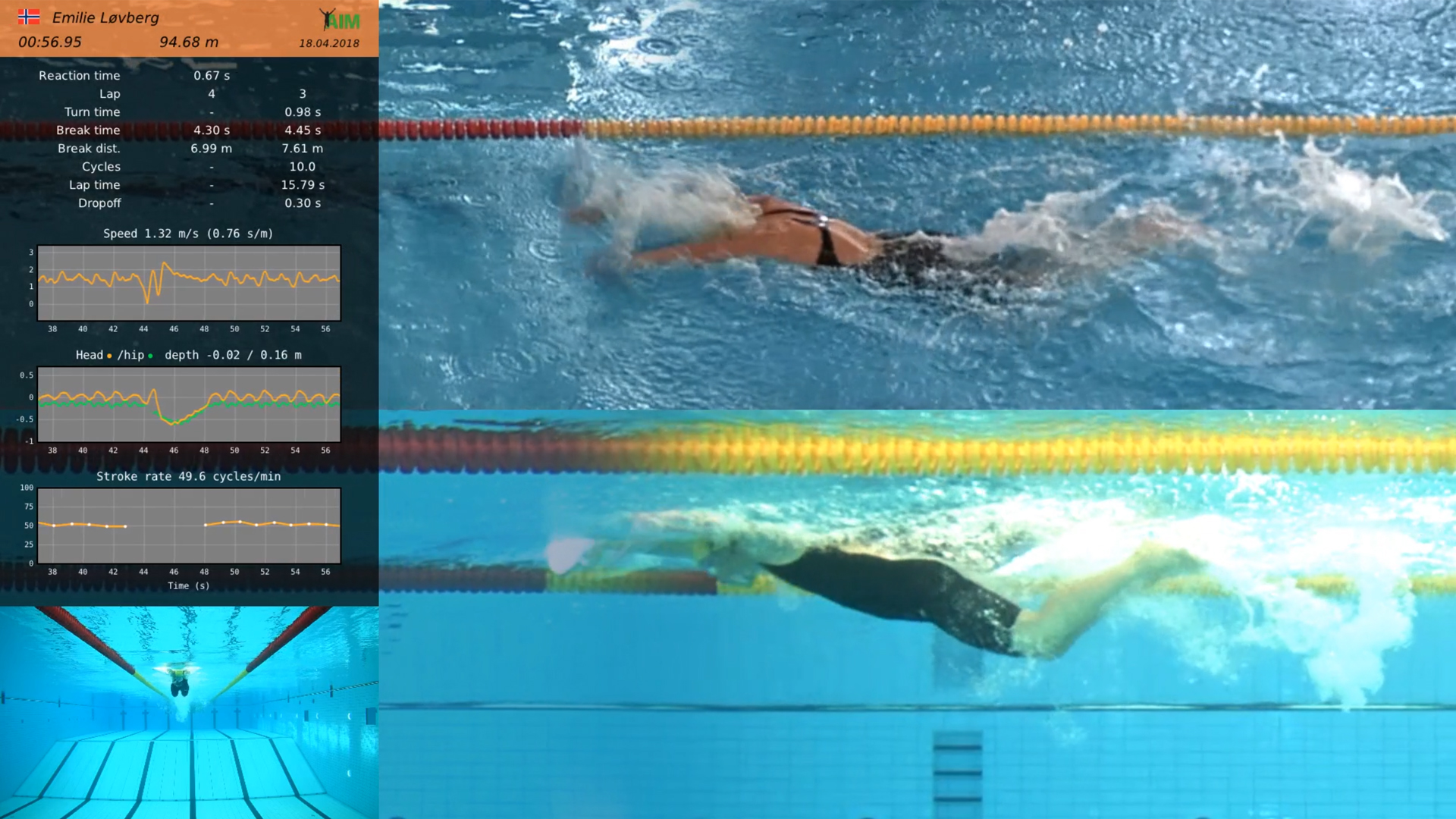
Distance per stroke only means something next to stroke rate. Speed is the product of both. A swimmer can increase distance per stroke by gliding longer and pulling less often — but if stroke rate drops too much, overall speed falls even as each stroke covers more water.
What the research actually shows about distance per stroke
Craig, Skehan, Pawelczyk, and Boomer (1985) studied U.S. Olympic Trials swimmers from 1976 to 1984 and found something coaches still argue about today. In 8 of the 12 events they studied, swimmers got faster over that era mostly by covering more distance per stroke, while stroke rate actually went down.
But two events broke the pattern entirely: women’s 100m butterfly and women’s 100m backstroke. In those, all the speed improvement came from a faster stroke rate, not a longer stroke. That’s the key point — there’s no universal “correct” ratio. The right balance is specific to the event, the stroke, and the swimmer.
The same study compared finalists to swimmers who were 3-7% slower in the same events. Finalists almost always covered more distance per stroke. But women depended more on stroke rate to stay competitive than men did. So “more distance per stroke” isn’t automatically the winning formula for every swimmer in every race.
Why more distance per stroke isn’t always better
A longer stroke usually means a longer glide, and a longer glide means the swimmer decelerates more between strokes. If distance per stroke goes up because the swimmer is gliding rather than propelling, the average speed across the lap can quietly drop.
This is exactly why distance per stroke should never be read alone. It needs to sit next to lap time and stroke rate on the same graph. A coach watching one number can be fooled into thinking a swimmer improved when they actually just got slower and lazier through the water.
Where dropoff fits in
Fatigue changes this picture over the course of a 200m or longer race. The same research found distance per stroke drops for everyone late in a race — that’s the dropoff effect. The difference between faster and slower swimmers wasn’t whether dropoff happened. It was how they responded.
Faster swimmers held their stroke rate steady, or even raised it, to compensate for the shorter stroke. Slower swimmers let both fall together. That means managing dropoff under fatigue is a trainable skill, not just something that happens to a swimmer.
This is where AIM Systems earns its keep. Every automated capture measures lap time, stroke count, and dropoff together, lap by lap, so a coach can see exactly where distance per stroke shortens and whether stroke rate compensates or collapses with it. Because the system runs on fixed cameras with no wearables, it tracks this through the underwater phase too, not just above the surface.
A coach can then pull up a swimmer’s own past race, or a teammate’s, and compare the two lap by lap on the same screen. That turns “swim longer per stroke” from a vague cue into a specific, measurable target for that swimmer, in that event.
If you want to see how this looks with your own swimmers’ data, get in touch with AIM Systems — no pressure, just a conversation.
Frequently asked questions
Is a higher distance per stroke always better for swimmers?
No — research on Olympic Trials swimmers found that in two events, women’s 100m butterfly and backstroke, all speed gains came from a faster stroke rate rather than a longer stroke, so the ideal balance depends on the event.
How does distance per stroke relate to stroke rate?
Speed is the product of the two, so a longer stroke that comes from excessive gliding can actually lower overall speed if stroke rate drops too much.
How does AIM Systems measure distance per stroke and dropoff?
AIM Systems’ fixed camera installation automatically records stroke count, lap time, and dropoff for every lap, so coaches can see exactly where a swimmer’s stroke shortens and whether stroke rate compensates.
Sources
- Craig, A.B., Skehan, P.L., Pawelczyk, J.A., & Boomer, W.L. (1985). Velocity, stroke rate, and distance per stroke during elite swimming competition. Medicine and Science in Sports and Exercise, 17(6), 625-634. https://doi.org/10.1249/00005768-198512000-00001
Social Contact