
Breaststroke turns get less coaching attention than freestyle flip turns, but they cost more time when done poorly. A slow breaststroke turn time doesn’t just lose you a tenth of a second at the wall — it kills your underwater speed off the wall, too.
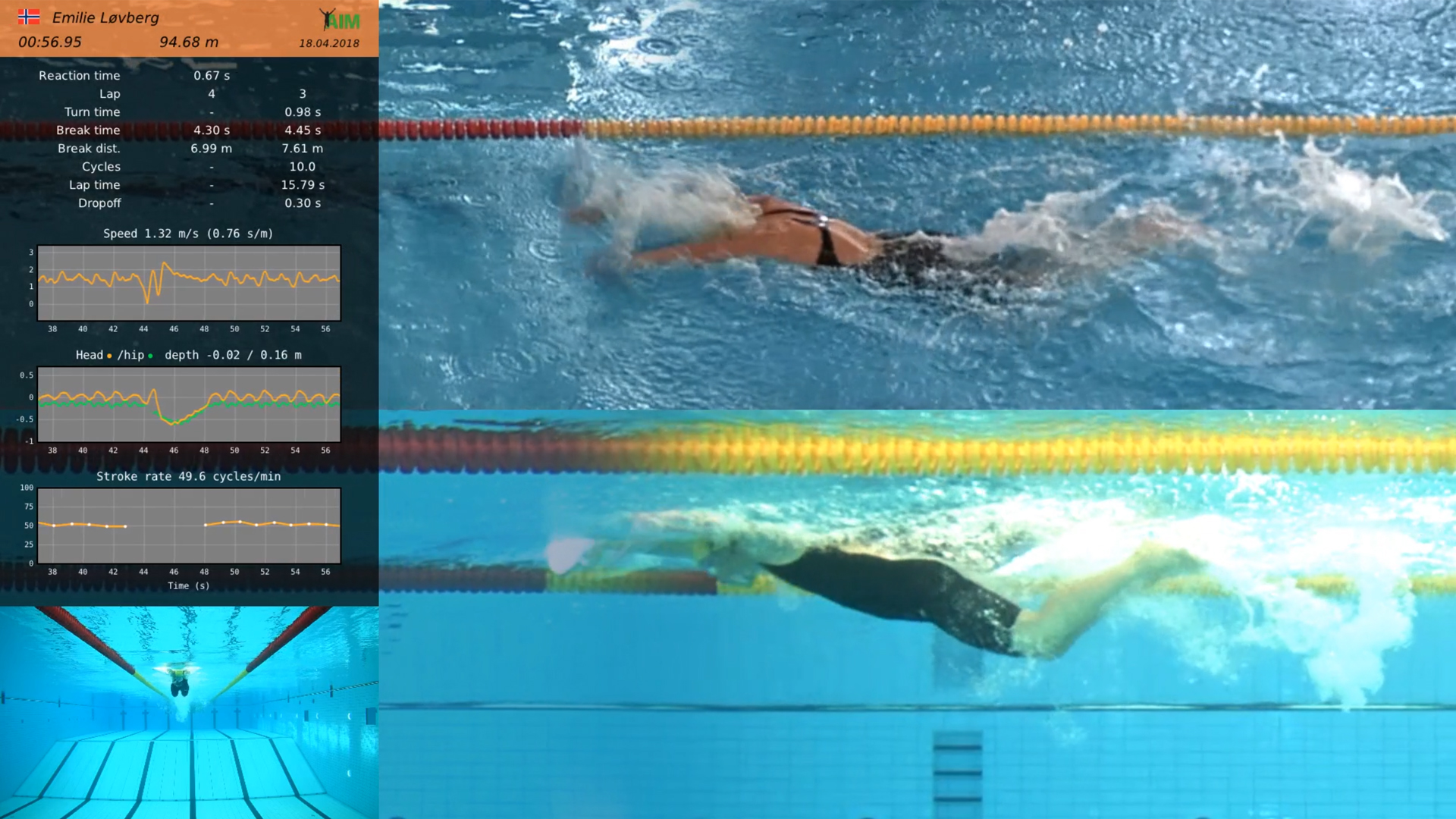
The breaststroke and butterfly turn is measured hand-touch-to-push-off. That’s the full window: the moment the hand hits the wall to the moment the feet leave it. Most coaches eyeball this. Few actually time it lap by lap across a season.
Why breaststroke turn time hides in plain sight
In freestyle, turn time and breakout are easy to separate by eye. In breaststroke, the touch, tuck, rotation, and push-off happen fast and close together. A coach on deck sees the swimmer touch and leave — but not which part of that sequence is slow.
That matters because the fix is different depending on where the time leaks. A swimmer who touches early and drifts into the wall loses time differently than one who touches clean but tucks slowly. Without frame-by-frame data, you’re guessing which drill to prescribe.
What actually separates a fast breaststroke turn
Elite breaststroke turns share a few traits worth coaching directly:
- Hand touch is simultaneous and at full extension — no gliding in flat-handed.
- The tuck starts before the hands leave the wall, not after.
- Hips stay high through rotation, so the push-off is close to horizontal, not angled down.
- Push-off happens on a single exhale — no hesitation for a breath.
Each of these shows up as a measurable delta in turn time. But the real payoff is downstream: a clean, high push-off feeds directly into stronger underwater speed off the wall, which is where breaststroke race time is often won or lost.
Turning turn time into a training target
This is where automated capture changes the conversation. AIM Systems measures breaststroke turn time on every single lap — hand-touch to push-off — along with breakout time and distance right after. Because the system uses markerless, camera-only tracking, it captures the tuck and rotation phase in detail no stopwatch or sensor strap can match.
That gives you a lap-by-lap turn time trend, not a season-end guess. You can compare a swimmer’s turns against their own past best times, against a training partner, or against a manually entered target. If turn time creeps up in week three of a taper, you’ll see it before the meet, not after.
AIM Systems is installed at facilities like Kuortane Olympic Training Center, SCAR in Lund, and the Norwegian Institute of Sport — places where turn mechanics get coached with this level of precision as a matter of course. It runs alongside the pool’s existing Omega timing system, so touch times stay accurate while the cameras handle everything else: stroke count, stroke rate, dropoff, and the full underwater phase.
If your breaststroke turns haven’t been measured this closely before, it’s worth a look at what shows up in the data. Get in touch with AIM Systems to see how it works at your facility.
Frequently asked questions
How is breaststroke turn time measured?
Breaststroke turn time runs from the hand touching the wall to the feet pushing off, unlike freestyle where it’s measured head-entry to push-off.
Why does a slow breaststroke turn affect the whole lap?
A slow or low push-off reduces underwater speed off the wall, which is often where breaststroke race time is won or lost.
Can AIM Systems track breaststroke turns without special equipment on the swimmer?
Yes, AIM Systems uses markerless camera-only tracking, so no cap color, sensor, or wearable marker is needed.
Social Contact