
Breakout distance — how far a swimmer travels underwater before the head breaks the surface after a start or turn — is one of the clearest windows into underwater strength you have on deck. A short breakout usually means weak kick propulsion or poor streamline holding the swimmer back; a longer, well-timed breakout usually means the swimmer is generating and sustaining underwater speed better than surface swimming speed. If you’re only watching stroke count and split times, you’re missing where a lot of races are actually won or lost.
The rule of thumb most underwater specialists use: breakout should happen close to where underwater speed and surface swimming speed cross over. For most competitive swimmers that’s somewhere between 8 and 12 meters off a start, and 6 to 10 meters off a turn, depending on stroke and distance. Breaststroke and butterfly pulls make this easier to time since there’s a legal underwater pull; freestyle and backstroke rely almost entirely on dolphin kick strength and streamline discipline to make it worth staying under that long.
Why breakout distance is a strength indicator, not just a technique choice
Coaches often treat breakout distance as purely a technical or tactical decision — “swim it out to 15m because that’s what elites do.” But an athlete who can’t generate consistent wall velocity off the push-off, or whose kick amplitude drops after the third or fourth kick cycle, will decelerate before reaching an optimal breakout point. Pushing that swimmer’s breakout distance out artificially, without the underwater kick strength to back it up, actually costs time rather than saving it.
This is why breakout distance needs to be looked at alongside wall velocity data, not in isolation. A swimmer with strong wall velocity but a short breakout is likely leaving speed on the table technically. A swimmer with a long breakout but poor wall velocity is likely masking a kick or strength deficiency with sheer lung capacity and stubbornness — and that catches up with them at 100m and 200m distances when the underwater phase happens four to seven times per race.
What to actually track
- Breakout distance on every start and turn, not just the flashy ones
- Wall velocity in the first 5m off each push-off
- Change in breakout distance across a season — is it lengthening as underwater strength improves, or has it plateaued?
- Breakout distance relative to stroke rate on re-entry — a swimmer who breaks out but immediately has a slow first few strokes may have surfaced too early, not too late
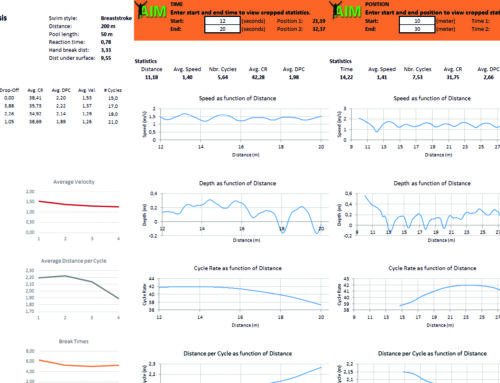
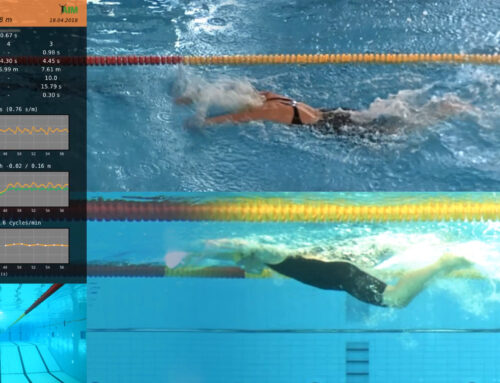
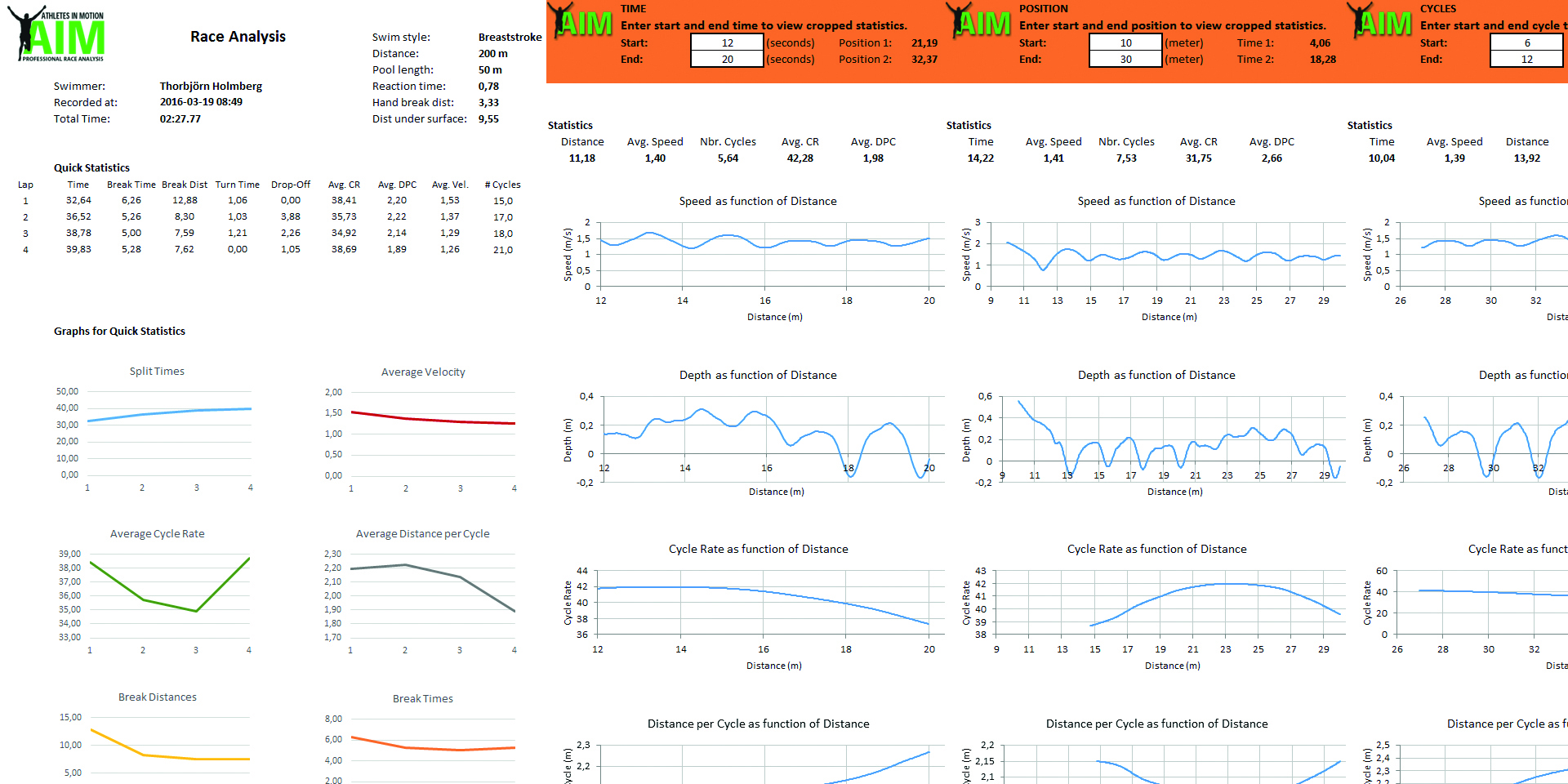
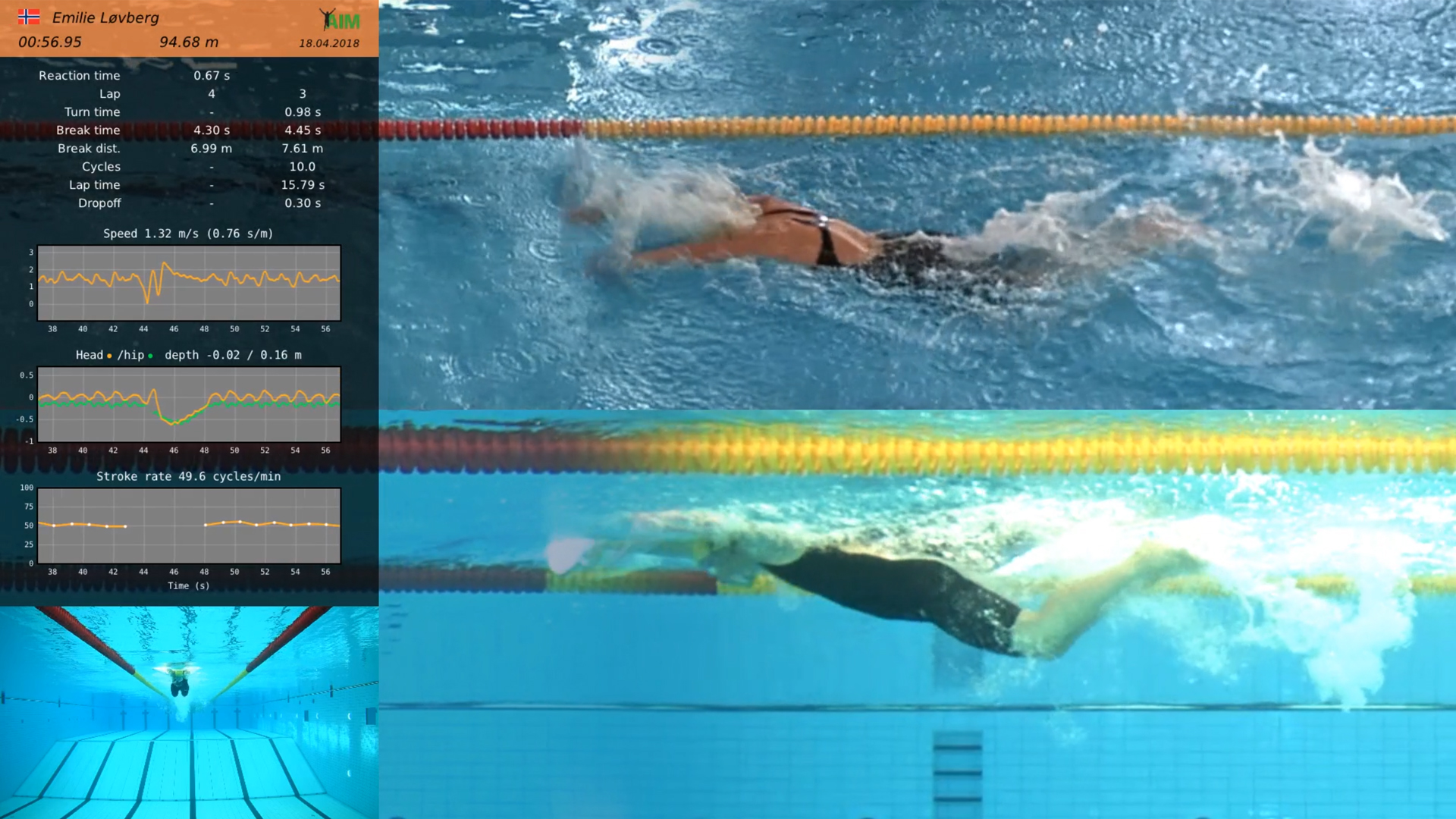
This is exactly the kind of data that’s tedious to collect by hand with a stopwatch and a notepad, and it’s a big part of why we built wall velocity analysis and breakout tracking into AIM Systems’ race analysis tools — poolside timing capture flags breakout points automatically off the video, so you can compare them across a whole squad or across a season without re-watching hours of footage frame by frame.
The practical takeaway for tomorrow’s practice: pick three swimmers, measure their breakout distance and their wall velocity for the first 5 meters off one start and one turn, and see if the numbers actually agree with what your eyes tell you in-season. Often they don’t — and that gap is usually where the next few tenths of a second are hiding.
If you want to see how this looks with advanced analysis software, get in touch with AIM Systems — no pressure, just a look at the data.
Frequently asked questions
What is a good breakout distance in swimming?
Most competitive swimmers should break out roughly 8-12 meters off a start and 6-10 meters off a turn, though this depends on stroke and the swimmer’s underwater kick strength.
Why do some swimmers break out too early?
Early breakouts are usually caused by weak dolphin kick propulsion or poor streamline that makes staying underwater slower than surfacing to swim.
How does wall velocity relate to breakout distance?
Wall velocity measures how much speed a swimmer generates off the push-off, and comparing it to breakout distance shows whether a longer underwater phase is actually helping or just delaying the swim.
Social Contact